Pulmonary Rehabilitation: What It Is, Who It Helps, and Why More Patients Should Know About It
Pulmonary rehabilitation is one of the most effective treatments for many chronic lung conditions, but many patients don’t know what it is or how to participate. Pulmonary rehabilitation combines supervised exercise, breathing techniques, education, and personalized support to help patients breathe easier, stay active, and improve their quality of life.
At Lyracore Pulmonary Health, we believe treating lung disease is about helping our patients live better lives, not just manage their symptoms. Here’s what you need to know about pulmonary rehabilitation and how we can help.
Key Takeaways
- Pulmonary rehabilitation is a medically supervised program designed to improve breathing, endurance, and daily function.
- It combines exercise training, education, breathing strategies, and personalized support.
- Pulmonary rehabilitation benefits many chronic respiratory conditions—not just COPD.
- Research shows pulmonary rehabilitation can improve quality of life, reduce symptoms, and lower the risk of hospitalization for many patients.
- If you’re living with a chronic lung condition, ask your pulmonologist whether pulmonary rehabilitation may be right for you.
What Is Pulmonary Rehabilitation?
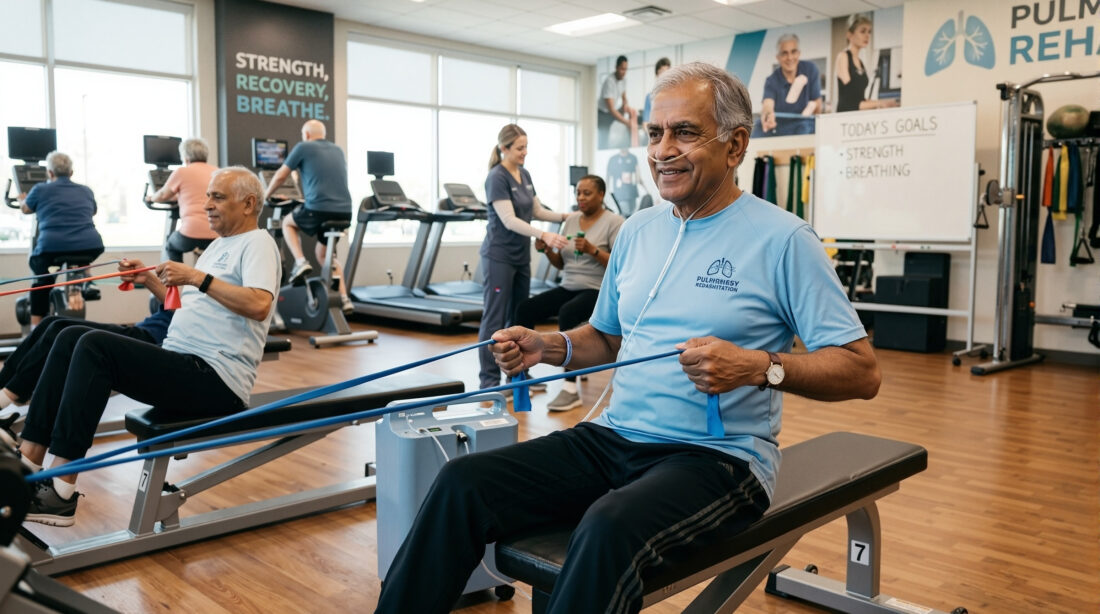
Pulmonary rehabilitation may sound like a form of exercise—and it includes an exercise component—but it also encompasses much more. Pulmonary rehabilitation is a comprehensive outpatient program that helps people with chronic lung diseases improve their physical conditioning while learning practical skills to manage their symptoms.
Programs are typically led by a multidisciplinary team that may include respiratory therapists, physical therapists, exercise specialists, nurses, and pulmonary physicians.
Depending on your individual needs, pulmonary rehabilitation may include:
- Supervised exercise training
- Breathing techniques to reduce shortness of breath
- Strength and endurance training
- Education about lung disease and medications
- Nutrition counseling
- Energy conservation strategies
- Emotional support and coping techniques
The goal isn’t to “fix” damaged lungs. Instead, it’s to help you maximize your lung function and improve your ability to stay active and independent.
Who Can Benefit From Pulmonary Rehabilitation?
Pulmonary rehabilitation doesn’t just help patients who are living with COPD. Depending on your diagnosis, symptoms, and overall health, your pulmonologist may recommend pulmonary rehabilitation if you have:
- Chronic obstructive pulmonary disease (COPD)
- Pulmonary fibrosis or other interstitial lung diseases
- Pulmonary hypertension
- Bronchiectasis
- Lung cancer before or after treatment
- Recovery following lung surgery
- Persistent breathing problems after COVID-19
- Other chronic lung diseases causing exercise limitation or shortness of breath
How Does Pulmonary Rehabilitation Help?
Many patients notice improvements after completing a pulmonary rehabilitation program. Benefits may include:
Less Shortness of Breath
Patients learn breathing strategies that can make daily activities feel easier while improving breathing efficiency during exercise.
Increased Endurance
Gradually increasing physical activity helps strengthen muscles, allowing your body to use oxygen more efficiently.
Better Quality of Life
Simple activities like climbing stairs, shopping, gardening, or walking with family often become easier as endurance improves.
Greater Confidence
Many patients become more comfortable exercising and managing flare-ups because they better understand their condition and how to respond to symptoms.
Fewer Hospitalizations
Research has shown pulmonary rehabilitation can reduce exacerbations and hospital admissions for many patients with chronic lung disease, particularly those with COPD.
Why Is Pulmonary Rehabilitation Underused?
Despite its proven benefits, relatively few eligible patients participate in pulmonary rehabilitation. In fact, many people who could benefit never realize pulmonary rehabilitation is even an option.
Several factors contribute to this gap, including:
- Lack of awareness among patients
- Delayed or missed referrals
- Transportation or scheduling challenges
- The misconception that pulmonary rehabilitation is only for severe disease
- A belief that shortness of breath is simply something patients have to live with
What Should You Expect During Pulmonary Rehabilitation?
Every program is personalized based on your diagnosis, current fitness level, and treatment goals, and both the pace and exercises are adjusted as your strength and endurance improve. Beginning with an evaluation that measures your breathing, exercise tolerance, and overall health, your care team will develop a plan tailored to your needs.
Over several weeks, you’ll participate in supervised exercise sessions while learning techniques to:
- Control shortness of breath
- Improve endurance safely
- Build strength
- Conserve energy during daily activities
- Better understand your medications and lung condition
Questions to Ask Your Pulmonologist
If you have chronic breathing problems, consider asking:
- Am I a candidate for pulmonary rehabilitation?
- Would pulmonary rehabilitation help improve my symptoms?
- Is there a program near me?
- What improvements should I realistically expect?
- Will my insurance cover pulmonary rehabilitation?
These conversations can help determine whether pulmonary rehabilitation should be part of your overall treatment plan.
Helping You Breathe Easier
At Lyracore Pulmonary Health, we believe every patient deserves a treatment plan that goes beyond medications alone. Pulmonary rehabilitation is just one of many evidence-based tools that we have found can help patients improve breathing, stay active, and maintain independence.
Our pulmonary specialists work closely with each patient to determine whether pulmonary rehabilitation or other therapies may help address the underlying cause of their symptoms and support long-term respiratory health.
Ready to Take the Next Step?
If chronic shortness of breath is limiting your daily life, schedule an evaluation with Lyracore Pulmonary Health, and we’ll help you determine the best next step in your pulmonary health journey.